Leica M EV1 review: Electronic viewfinder model is a revelation
What is it?
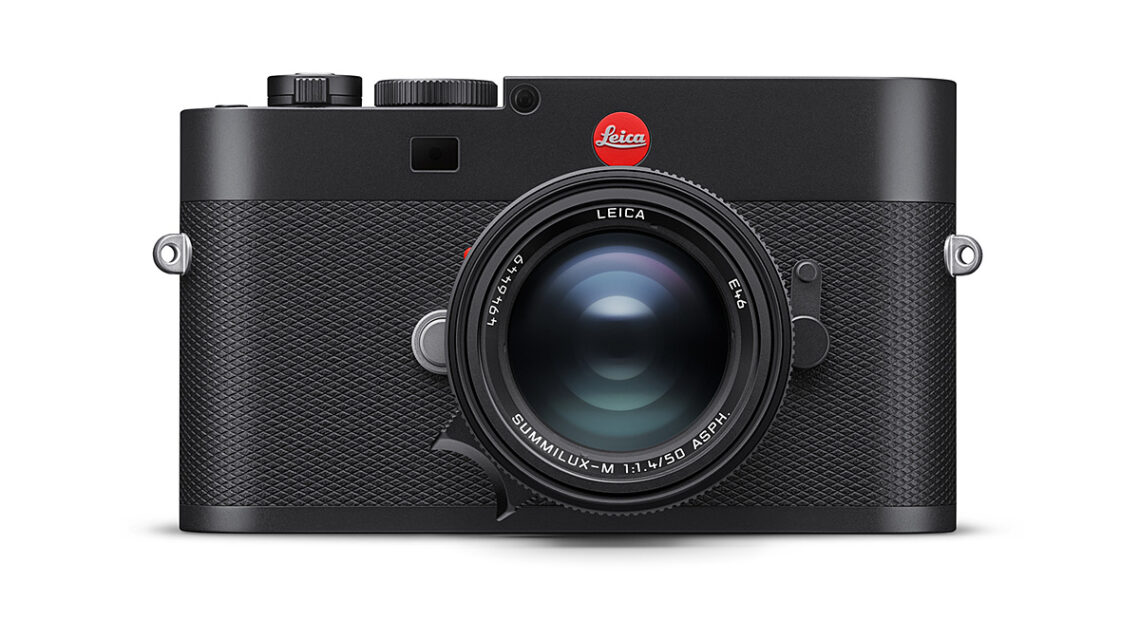
The Leica M EV1 is a long-rumoured model based on the Leica M11 body and M-mount, but with an electronic viewfinder rather than an optical rangefinder. It’s a feature that’s been a long time coming, but now that it’s here, what is it really like? And does it really ‘work’ in place of the rangefinder?
Key features
- Full-frame 60MP BSI-CMOS sensor with Triple Resolution Technology ( 60, 36 or 18 megapixels)
- 5.76 megapixel EVF
- Manual focus only, with focus peaking and focus assist (magnification) aids at taking aperture
- Supports Content Credentials
- 64 GB internal memory (and single SD slot)
- Connectivity via Bluetooth, Wi-Fi or cable
- Available from 23rd of October 2025 (later in the US)
- Retail price is £6,840.00 / €7,950.00 / $8,995.00 incl. VAT
- Hand grip available for £340.00 / €395.00 / $460.00 incl. VAT.
What’s new?
Leica users will immediately notice the similarity between the existing Leica M and the Leica Q models, the latter being a fixed lens model with an electronic viewfinder but, ultimately, based on the Leica M. The Leica Q’s compact dimensions are due to the exclusion of a focal plane shutter, with its fixed focal length lens housing both optical image stabilisation and a leaf-type shutter. On the other hand, the digital Leica M bodies feature a vertical-running metal-bladed focal-plane shutter from the Leica R8/R9 SLRs, albeit modified to reduce noise. Allthough somewhat bulky and with a relatively large and tall frame this shutter is still more readily accomodated than the mechanically wound horizontal cloth type shutter found in the film based Leica Ms. Still, there isn’t much space in the body for a electroninc viewfinder let alone in-body-stabilsation which has to use an oversized shutter, as some had hoped to see in the Leica M EV1, so we’re unlikely to see that without some advances in sensor design. And if you’re wondering what the small (secondary) rangefinder window is used for: it has been repurposed to house a flashing LED for the self-timer.
The new Leica M EV1, therefore, is a synthesis of two models and features the full-frame 60MP BSI-CMOS sensor with Triple Resolution Technology (60, 36 or 18 megapixels) of the Leica M11 models, and the 5.76 megapixel EVF of the Leica Q3 models.
From the supplied technical data sheet, the EVF has a 5,760,000 dots resolution, 60 fps refresh rate, 0.76x magnification, 100% frame coverage and 20.75 mm exit pupil position. Anything around 18-21mm should provide a comfortable viewing position with eyeglasses. If you prefer not to use glasses or don’t have to, the Leica M EV1 is the first M to have built-in correction; the dioptre setting range is -4/+2 dpt, and, naturally, there’s an eye sensor for automatic switchover between the viewfinder and LCD panel. One downside of using the EVF, though, is that the BP-SLC7 battery (the same as on the Leica M11) doesn’t last as long. CIPA standard figures indicate the battery can power 237 shots using the EVF compared to 700 for the optical, rangefinder-based Leica M11. That’s around a two-thirds reduction compared with the rangefinder version. However, that is to be expected.
In most other respects, the Leica M EV1 is like the M11 before it, but it does have one new feature from the M11P, which is support for Content Credentials. This is likely to find favour with those working in news gathering and during high-value/prestigious competitions, where editing is frowned upon or even forbidden in some cases, but is unlikely to affect other buyers’ decisions currently. Still, it’s a nice feature to have for future peace of mind.
How does it handle?
In a word, the handling is terrific. With aluminium top and bottom covers and, presumably, a lighter-weight viewfinder mechanism, the body is even lighter than the previous models. At 484 grams (1.06 pounds), including battery and card, it’s also lighter than any film-based Leica M. The press photos are excellent, but don’t really do it justice; in the flesh, it’s really impressive. Build quality is superb, and it looks to be manufactured to an incredibly high level. In some respects, it appears somewhat bizarrely, I know, even better made than the Leica M11.
Button placement is good with excellent access for the right hand to make adjustments during capture and the left hand for aperture selection and focusing, and then playback. Leica’s menu system is one of the best, if not the best. However, I found the inclusion of a dedicated Content Credentials page as the first page of the main menu somewhat unnecessary, especially as you must scroll past it to access the rest of the menu. Given that once the details are set, or not as the case may be, there’s no need to revisit, it is strangely out of place.
The Leica M EV1 also adopts the same outstanding customisable FN buttons as seen on previous models. There are two plus a lever. With the button located near the shutter button, set to magnify the viewfinder image, operation is slick. However, you can, if you prefer, use the lever on the front or set the camera so that magnification is automatically activated during focusing. I found the latter a bit intrusive and prefer the top plate FN button position. Also, if you happen to have the focus point way off centre, say up in a corner, using the rear direction pad can take a while to move it to where it’s needed. Hopefully, this can be sped up in a future firmware update (ideally with two speeds: slower/faster, based on how long the pad is pressed). Alternatively, you can double-tap the LCD to position the focus point or use the thumb wheel, though the latter must have been customised to do so. There’s a focus peaking option, but the magnification feature worked well enough for me that I didn’t feel the need to use it.
All said and done, I actually found the electronic viewfinder easier to see and easier to focus than the rangefinder, both with and without eyeglasses. Viewfinder information is much more extensive than that of the Leica M11. There’s an exposure bar and the shutter speed, but no aperture setting, even an approximated one with coded lenses. It would have been nice to have, but I forgot about it within minutes of using the camera. And, of course, you don’t even need the exposure indicator if you set the viewfinder to simulate exposure, and you don’t have to keep checking the rear LCD afterwards. Admittedly, that’s an advantage of all cameras with an EVF, but it would be remiss of me not to mention it. What’s more, if you’re one to use depth-of-field (aka hyperfocal, or zone, focusing) for landscapes or grab shots even, having an EVF doesn’t preclude that.
There are other benefits for the M owner as well, of course. Newer M lenses are appearing with shorter minimum focus distances, which the rangefinders can’t accommodate without adopting live view or the optional electronic Visoflexes. But the biggest benefit, for me anyway, is being able to see the full field of view of any attached lens without using those options, and that includes adapted lenses. Another, less obvious benefit is being able to focus at the taking aperture, thereby mitigating any aperture-dependent focus shift. Yes, it’s obvious, and all this can be achieved with the Visoflex options, but they often get in the way, and after 25 years or so, I’m still not a fan of holding any camera at arm’s length to focus using the rear LCD.
Looking to the future, it can’t have escaped the designers that the camera also opens up new possibilities for lenses specifically designed for the camera, such as high-speed short telephotos and ultrawide-angle lenses. We’ll have to wait and see.
How does it perform?
As it uses the same 60 MP sensor as the Leica M11 models, the Leica M EV1 unsurprisingly performs identically. And, that’s a good thing. Admittedly, I’ve questioned the viability of the Triple Resolution feature in the past. This lets you select the sensor to output an S, M, L, or DNG (RAW) file. It provides 38/18 MP resolution options in addition to the native 60 MP, but the process uses pixel binning, which isn’t recoverable. Still, there are some benefits. As a RAW user only, for me this mostly equates to using the 36 MP option to reduce file sizes, but that and the 18 MP option are, to my mind, best employed when used in conjunction with very high ISOs. You need to be careful not to accidentally leave it set to 18 MP, as you can’t then choose 60 or 38 MP later in post. But that’s just how it is. At the native 60 MP setting, file sizes vary considerably, but expect around 85 MB on average, even with lossless compression. So the 38 MP option remains a solid all-round choice, and provides a good balance of file size and resolution. As for WB, images are predominantly on the cool side, but that’s irrelevant when using RAW. Noise and sensor performance are the same as on the Leica M11 (please see my review of that camera here; there’s little point reiterating it).
The Leica M EV1 features the Content Credentials option from the Leica M11P, which allows independent verification of the original file and details any subsequent edits. If you use Lightroom Classic, for example, any edits made are recorded and can be verified at the Content Credential’s site by uploading the image file.
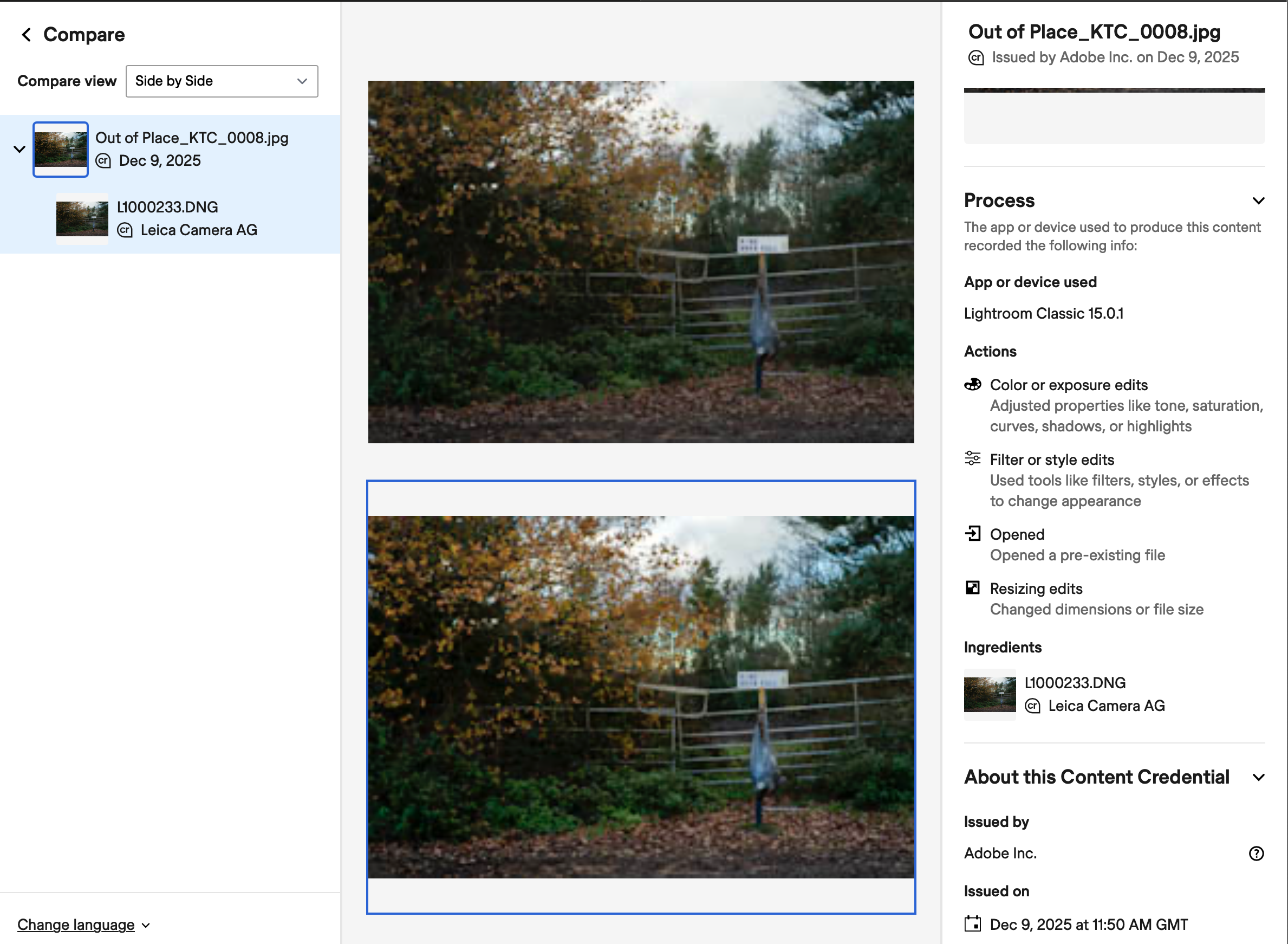
The original, as captured, file is shown above, while the edited version is displayed below. A list of some of the edits is detailed to the right. Interestingly, the edits mentioned aren’t all that specific, but the effect on the image is quite clear. In this instance, the image was processed quite mildly.
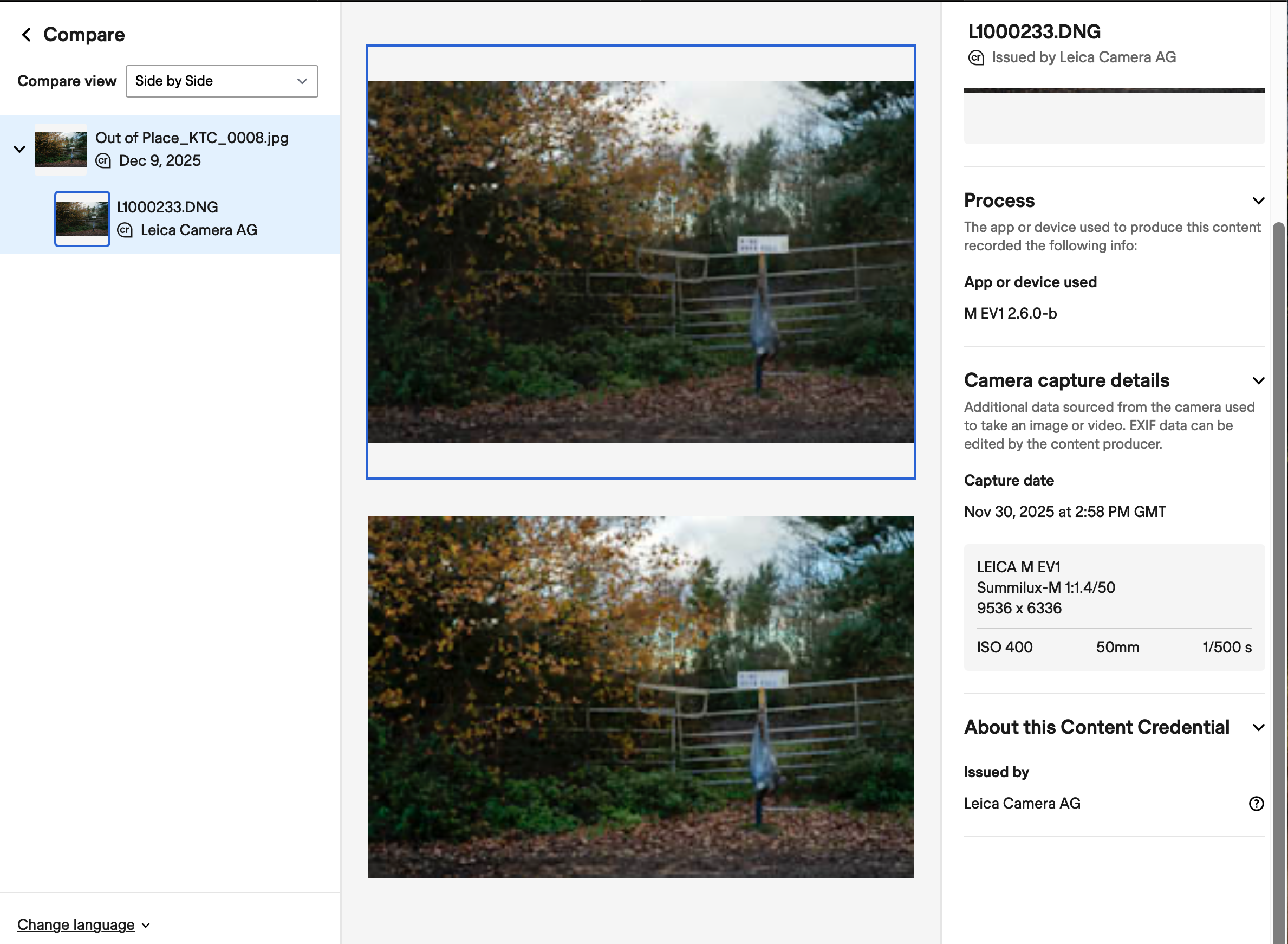
In this screenshot, with Content Credentials enabled in camera and then in Lightroom, the ‘original’ file can be displayed before the edits have been applied.
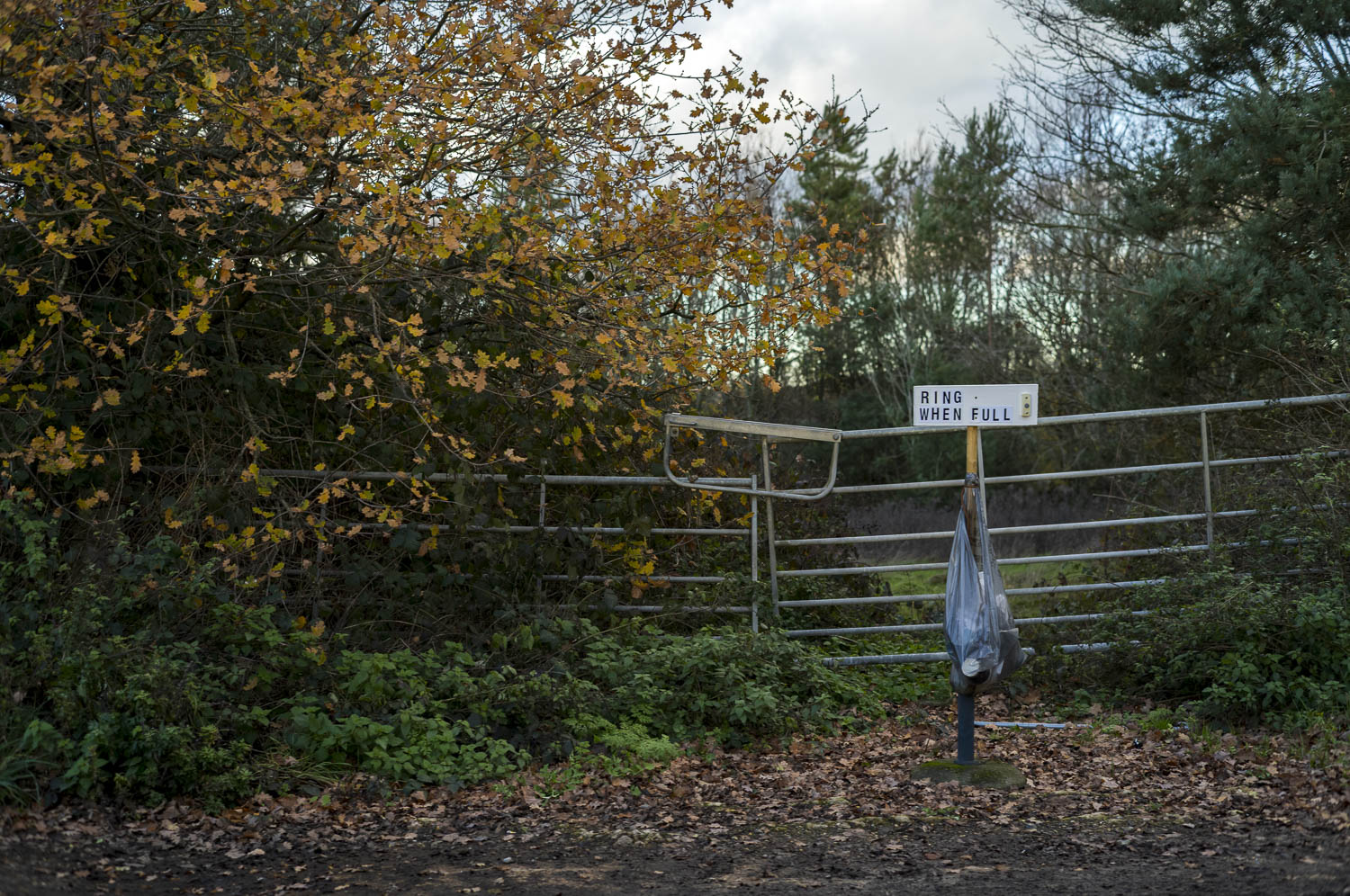
Lay-by (2025). A personal project on lay-bys with an emphasis on the environmental impact of fly-tipping in the UK. The road where this photograph was made was extremely hazardous for pedestrians, and so it was made from a moving car (I wasn’t driving at the time) using zone focusing.
Conclusion
Although I’ve advocated for a Leica M with an EVF, I’m still surprised at just how well this has been implemented. It’s quite a revelation and clearly eliminates the need for the optional electronic Visoflex available for the Leica M11 variants, enabling full integration of all Leica M lenses (although there are one or two exceptions), including the newer, closer-focusing lenses. Admittedly, you could buy a Leica SL with the Leica-M Adapter L, which is a solid choice as well, but that combination isn’t as slick or as stealthy as the Leica M EV1. Furthermore, the handling and balance are excellent, even with a heavy lens like the chromed-brass Summilux-M 50mm F1.4 Classic attached. But of course, it’s the electronic viewfinder and the ease with which focus can be achieved that must take the credit for its success. If you’re curious or already have a rangefinder-equipped Leica M and a bag full of lenses, then adding a Leica M EV1 is a must. But even if you don’t have that setup or anything near it, I implore you to go take a look at the Leica M EV1, as it’s an outstanding camera.
The new Leica M EV1 is available from 23rd of October 2025 at the retail price of £6,840.00 / €7,950.00 / $8,995.00 incl. VAT. A hand grip is also available for £340.00 / €395.00 / $460.00 incl. VAT.
Order [affiliate links]
WEX Photo (UK) | Park Cameras (UK) | Leica Camera (UK)
B&H Photo (US) | Adorama (US) | Leica Camera (US)
Recommended v90-rated SDXC II card
Leica recommends SanDisk Extreme Pro SDXC cards (UHS-II – V90), check prices [affiliate links]
As an affiliate member, I may earn a commission when you purchase through these links. It does not affect the price you pay.
Read our review of the Leica M11
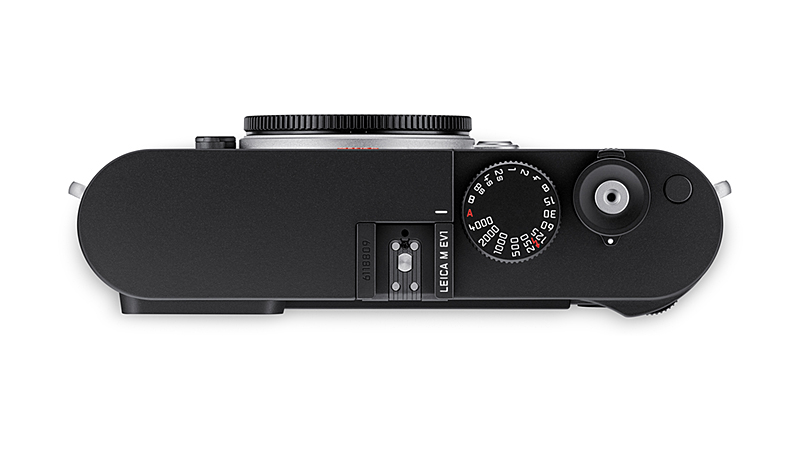


Leica M11 Monochrom and Leica M EV1 for comparison.
Technical Data
| Manufacturer | Leica | Leica |
| Model | Leica M11 | Leica M EV1 |
| Web | www.leica-camera.com | www.leica-camera.com |
| Lens Mount | Leica M | Leica M |
| Sensor | 60 MP full-frame (35.8 x 23.9 mm) CMOS sensor | 60 MP full-frame (35.8 x 23.9 mm) CMOS sensor |
| ISO sensitivity | ISO 64 to 50,000 | ISO 64 to 50,000 |
| Shutter | Mech. shutter: 60 min to 1⁄4000 s Electronic shutter function: 60 s to 1⁄16000 s Flash Sync: up to 1⁄180 s | Mech. shutter: 60 min to 1⁄4000 s Electronic shutter function: 60 s to 1⁄16000 s Flash Sync: up to 1⁄180 s |
| AF/MF | MF only, rangefinder coupled, from 0.7m | MF only via EVF |
| Continuous shooting | Up to 4.5 frames per second (fps) | Up to 4.5 frames per second (fps) |
| Video | N/A | N/A |
| Viewfinder | Optical, 0.73x mag all lenses | Electronic, 0.76x mag all lenses |
| Display | 2.95-inch touchscreen LCD with 2.33 million dots | 2.95-inch touchscreen LCD with 2.33 million dots |
| Connectivity | Wi-Fi dual-band and Bluetooth v4.2 BR/EDR/LE for remote control and image transfer via free app. USB 3.1 Gen1 Type-C | Wi-Fi dual-band and Bluetooth v5 LE for remote control and image transfer via free app. USB 3.1 Gen1 Type-C |
| Battery | BP-SCL7, 700 shots per charge (with EVF, CIPA standard), approx. | BP-SCL7, 237 shots per charge (with EVF, CIPA standard), 244 (with LCD), approx. |
| Body | Weather-sealed body with magnesium alloy and aluminium top and bottom plates. Silver finish has a brass top plate. | Weather-sealed body with magnesium alloy and aluminium top and bottom plates. |
| Memory | SD card slot (compatible with UHS-II). 64GB internal memory | SD card slot (compatible with UHS-II). 64GB internal memory |
| Dimensions (wxdxh) | 139 x 38,5 x 80mm. (5.47 x 1.52 x 3.15 inches) | 139 x 38,5 x 80mm. (5.47 x 1.52 x 3.15 inches) |
| Weight | Black: 530 grams (1.17 pounds) inc battery and card Silver: 640g (1.41 pounds) inc battery and card | Black: 484 grams (1.06 pounds) inc battery and card |
Press Release
Next Milestone for the Leica M-System
Leica M EV1 – the first M-Camera with an integrated electronic viewfinder
Wetzlar, 23rd of October 2025 – Leica Camera AG has reached the next milestone in its history and, with the arrival of the new Leica M EV1, is introducing a new segment to the Leica M-System. In addition to the digital and analogue M-Camera with an optical rangefinder, Leica is welcoming a new member to the M family in the form of an M-Camera with an integrated electronic viewfinder (EVF), combining the advantages of an EVF with the traditional values of the M-System. Not only does it make joining the world of M photography easier, but it also enables reliable and comfortable focusing irrespective of visual acuity – in particular when using the fast Leica Summilux and Noctilux lenses at very shallow depths of field, and when composing images with ultra wide-angle, telephoto and macro lenses.
As a photography pioneer, Leica Camera AG has been bravely treading new paths for 100 years now. As the first series-produced 35mm camera, the Leica I revolutionised photography back in 1925. The Leica M is considered its successor and exemplifies the essence of the Leica philosophy like no other. With iconic design, precision craftsmanship “Made in Germany” and uncompromising quality, it has embodied the values and legacy of the brand for over 70 years by harnessing innovation and forward-looking technology. Since its introduction, the Leica M has been systematically refined with each new generation, such as in 2006, when Leica transported the soul of the analogue M-Camera to the digital age with the M8. The current models – such as the M11 Monochrom with its black-and- white sensor, the M11-D with no display, the M11-P with Content Credentials Technology, and the analogue M6, MP and M-A – all demonstrate the ingenuity and individuality of the M-System.
By introducing an EVF to the M-Camera, Leica is fulfilling a frequent customer request and expanding the range of applications for seasoned M users. Thanks to its intuitive operation, new customers will also find it easier to delve into the world of the M-System. The M EV1 continues the M-Camera’s long tradition of timeless, functional and iconic design. Handmade in Germany using high-quality material, it speaks the familiar, clear and cultivated design language of an M. The leatherette covering featuring a diamond pattern and the purist front deliberately set it apart from the traditional rangefinder M-Camera.
The image in the Leica M EV1’s viewfinder is shown exactly as it will be when the shutter snaps – in line with the lens used, focal length and aperture. The direct preview of the field of view and plane of focus is very advantageous, especially when it comes to composing images with ultra wide-angle and telephoto lenses. The precise real-time exposure preview provides additional certainty and unleashes new creative possibilities though targeted under, and over, exposure. With the integrated dioptre compensation, the viewfinder can be adapted to the user’s own visual acuity. A setting wheel allows an adjustment between -4 and +2 dioptres.
The high-resolution 5.76 megapixel EVF provides brilliant image quality with exceptional clarity and natural colour rendering. If desired, relevant exposure data – such as shutter speed, ISO and exposure value – can be shown around the image, which remains completely uncovered. The automatic switch between viewfinder and touch panel is carried out by an eye sensor.
The integrated focus assist, already found in other Leica cameras, is particularly user friendly. Focus peaking highlights the active plane of focus with overlaid colour, allowing precise adjustment of the desired image area in real time. The focus zoom also makes manual focusing easier by means of two freely selectable magnification factors, either automatically by turning the focus ring or manually via one of the function buttons. This enables precise focusing, in particular when using fast lenses at a shallow depth of field and in the macro range. The lever at the front of the camera, which is used in rangefinder M-Cameras to preview bright-line frames, has been given a useful function on the Leica M EV1: this control can be assigned to one of the focus assists or the 1.3× or 1.8× digital zoom. With a simple touch to the right or left, the focus assist can be activated or deactivated quickly and comfortably as the situation requires.
The new M-Camera has been engineered based on the Leica M11 and its full-frame BSI-CMOS sensor with Triple Resolution Technology, which is admired for its precise colour rendering, impressive detail resolution, high dynamic range and excellent noise behaviour. Images can be saved in either DNG or JPEG format at a resolution of 60, 36 or 18 megapixels. The Maestro III chip processes image data at the highest resolution quickly and saves them either on the 64 GB internal memory or an SD card. Thanks to seamless connectivity via Bluetooth, Wi-Fi or cable, the camera can be quickly and conveniently connected with the Leica FOTOS App. Images can also be sent to smartphones energy efficiently in the background using Bluetooth Low Energy technology. Just like the M11-P and M11-D, the new Leica M EV1 supports Content Credentials. With this groundbreaking technology by the Content Authenticity Initiative (CAI), a digital signature is added to images, which verifies their origins and any post-processing in a tamper-proof manner.
The Leica M EV1 will be available worldwide at Leica Stores, the Leica Online Store and authorised dealers from the 23rd of October 2025. The recommended retail price is £6,840.00 / €7,950.00 / $8,995.00 incl. VAT. For comfortable handling and additional hold, a hand grip with a matching leatherette covering is available for £340.00 / €395.00 / $460.00 incl. VAT.