Fujifilm Fujinon GF30mm F5.6 T/S review
What is it?
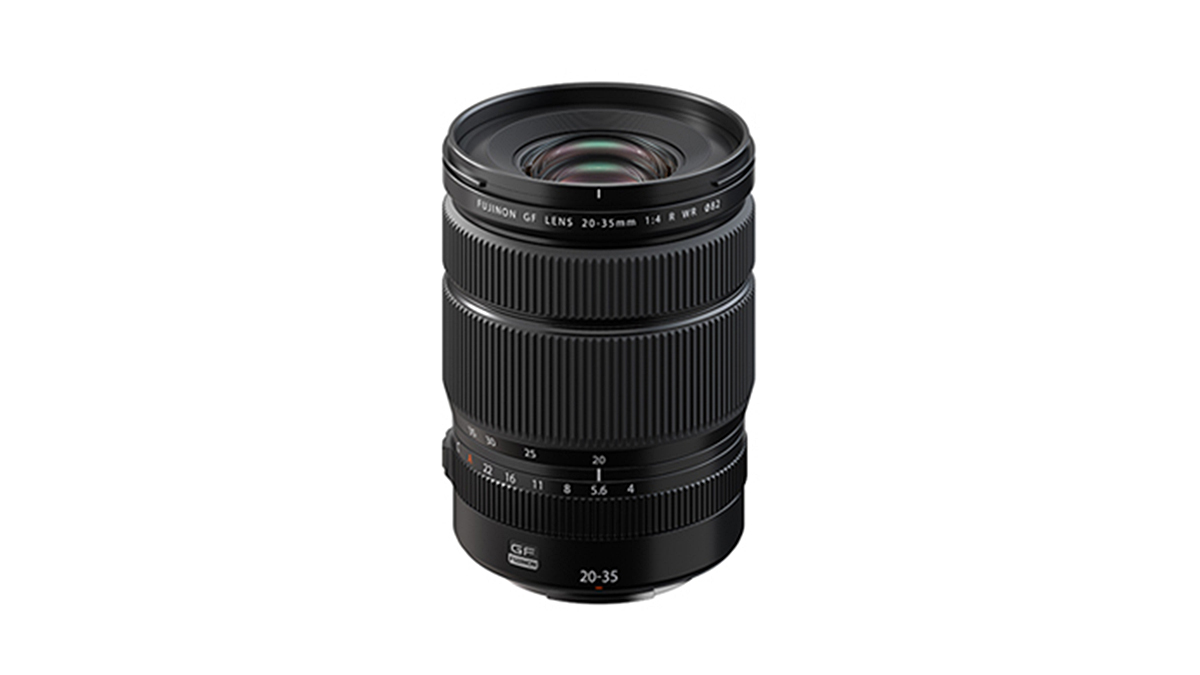
The Fujifilm Fujinon GF30mm F5.6 T/S is a highly anticipated lens in the GFX system. Why? Because it’s the first serious challenger to the Canon TS-E lenses (and the Nikon PC Nikkors), which are routinely adapted to fit on the larger-sensor GFX cameras.
As a 30mm lens designed to cover the 44x33mm MF sensor, it is the equivalent of a 24mm in full-frame 35mm terms and is, without doubt, the most popular focal length for architecture and interiors. The manual-focus lens will also appeal to landscape photographers.
(Arguably, a 35mm tilt/shift might be as popular or even more so (the Nikon and Zeiss 35mm shift-only models are still sought-after, with the latter going for £1,000 or more secondhand) but there aren’t any in production currently, and it’s an often asked-for focal length for exteriors like this new lens and interiors. Fujifilm, if you’re reading this, a 35mm tilt/ shift might be a good follow-up, or shave some off the price and offer a 35mm shift only)
As a tilt-shift lens, it offers +/- 8.5° tilt, +/- 15 mm shift. However, it’s the latter feature that’s likely of most interest to potential users. Tilt is nice to have, but it’s difficult to employ in regular use even when you have the benefit of an EVF. Still, to compete with the highly regarded Canon TS-E 24mm F3.5L II, it must be seen to compare favourably on specs.
Like modern rival lenses, both shift and tilt can be deployed independently or together in the same ‘direction’, or offset up to 90 degrees, then effectively offering shift with ‘swing.’ The tilt/shift mechanism can also be rotated, of course, with detents at every 30 degrees.
This lens uses an advanced optical design with no less than 16 elements in 11 groups and adopts one Super ED (similar properties to fluorite) and 3x ED glass elements. The minimum focus is a typical 30cm. Some profile corrections are applied to RAW files and out-of-camera JPEGs for EVF and LCD viewing, but they’re subtle, even when viewed in something like FastRaw Viewer, which can ignore them.
Priced at £3,899 inc VAT ($3,999) at launch, it’s a considerable investment. My sample is engraved with ‘Made in Japan’.
Pre-order [Affiliate links; as an Amazon associate, I may earn commission on a sale through these links. However, it does not affect the price you pay.]
WEX UK | Amazon | Park Cameras UK
B&H Photo US | Adorama | Amazon
How does it handle?
Anyone familiar with the Canon 24mm TS-E F3.5L II will feel immediately at home. The shift feature adopts a large knob on the left-hand side with a smaller locking knob opposite on the right-hand side. Provided the locking knob is undone, this arrangement allows you to adjust up or downward shift handheld, if need be. And it’s also used to lock in a dialled amount (again if need be).
My model didn’t move when it was unlocked (even though it’s a press loaner), but it’s still a relatively new lens. So I can’t say if it loosens up over time, still, that is to be expected.
The viewfinder shows a display of the amount of movement in mm, but even though that’s a nice touch, it’s easy to see exactly what the lens sees in the viewfinder – and a compelling enough reason for switching to mirrorless from a DSLR in itself. Combine that with WYSIWYG in the VF when using manual exposure, and DSLRs seem positively anachronistic.
The tilt or swing feature, depending on how you’re using it, has a sliding lock to prevent accidental engagement. Without it, it’s easy to forget some tilt has been applied previously or even accidentally, which is a common cause of blur on one side (through misalignment). Many architecture photographers don’t use the tilt feature as it’s generally tricky to get everything in focus and is time-consuming as a result, so a lock is essential. A small locking knob is also positioned on the opposite side of the larger adjustment knob.
When tilt and shift (fall and rise) are required together in the same direction to extend the depth of field and correct perspective, the tilt mechanism can be rotated 90 degrees. A small locking lever needs to be disengaged, and there are detents at every 30 degrees. When oriented 90 degrees, the two adjustment knobs sit a few mms side-by-side, but as one sits higher than the other, there’s still enough room to adjust them independently – one of the benefits of the lens being quite large.
In addition to the tilt mechanism’s rotation feature, another close to the mount allows the barrel with the tilt/shift mechanisms to rotate. It works similarly to the first, only it allows ±90 degrees of rotation. Both locking levers are easy to access with your right-hand forefinger.
When on a tripod, the controls are a lot easier to access, obviously, and the supplied tripod collar with foot is a crucial feature. Not only is it rock-solid with no play, but it also means the camera, rather than the lens, is moved, meaning shift (and tilt) movements are made around the nodal point, making panoramas easier to align in post.
Sadly, there’s no Arca-style groove in the foot. It’s a somewhat missed opportunity, and I doubt it’s a licensing issue as the Arca-style plates aren’t of the same dimensions as the originals anyway (likely to avoid said licensing). And, if you are wondering, that’s the reason why it’s best to buy heads with Arca-style screw-clamps rather than lever-style; they’re unlikely to work with third-party plates.
While the controls and operation are all very similar to rival lenses, one very nice addition is the recording of the shift and rotation amount (in mm and degrees), which is displayed in the viewfinder and recorded in the EXIF data. Unfortunately, the tilt data isn’t recorded, and that’s a real shame (if only to know whether it was used inadvertently or not).
Capture One 24 takes notice of the Shift and Rotation of the GF30mm F5.6 T/S lens in the GFX100 II’s EXIF data. This shows I used 8.5mm of Shift and 270-degree rotation (basically an 8.5mm rise). Note, I have left some residual perspective in the photograph to prevent that unnatural, ‘top-heavy’ look from over-correcting.
Lightroom doesn’t support the shift and rotation data currently, but it is in Capture One Pro 24. This can be used for various corrections in the LCC tool, but it requires some setting up to benefit. In the image above, C1 shows I used 8.5mm of Shift and 270-degree rotation (basically an 8.5mm rise). I could have used more, but I deliberately didn’t overcorrect the ‘verticals’ to leave what’s called some “Residual Perspective”. There’s nothing worse than buildings that look top-heavy from over-correction using Tilt/Shifts.
Although I didn’t have time to do it, you could use Capture One’s LCC tool to remove the vignetting for your lens; see Capture One’s online User Guide for more details.
While it’s a bit of a process, requiring a diffuse perspex ‘filter’ (or something similarly diffuse at a push), it can be streamlined for generic use with a bit of thought, and when set up, it is a time saver when working commercially or otherwise.
Is the Fujifilm Fujinon GF30mm F5.6 T/S suitable for more general use?
With it approaching 136mm (5.5 in.) in length and 87.1mm (3.4 in.) in width, it feels quite large in the hands, and with a weight of 1340g (2.95 lb), it’s quite noticeable. What’s more, that last figure, I suspect, is without accoutrements such as the supplied tripod bracket, metal hood and adapter ring.
I weighed the lens with the hood, adapter ring, filter, tripod collar and foot with my own small Arca-style (RRS-made) lens plate attached and the rear cap in place, and it totalled a cool 1778g. Still, it’s hand-holdable even with the tripod collar in place, and I used it very successfully with the base sitting in my palm while focusing.
The adapter ring replaces a cosmetic ring with a detent rather than a filter thread used to hold the smaller (72mm) of the two supplied caps, and features a filter thread (105mm) and a second thread for the hood.
Fujifilm provided a Fujifilm-branded 105mm Protector filter for the review, and while these 105mm filters can be expensive, the larger size prevents vignetting. If you want to go without the hood and tripod bracket to use hand-held, you could leave the adapter ring on for filters, such as a polariser or even a filter holder, which is a nice touch.
When the fully-rigged-out lens is attached to the Fujifilm GF100 II, it’s quite a handful, but crucially still smaller and lighter when compared to a medium format 645 DSLR with a 35mm lens.
This is an X-Pan/Fujifilm TX-like crop from a single frame using the GF30mm F5.6 T/S with a 5mm fall. On the Fujifilm GFX100 II, that still amounts to 45MP.
One big advantage of something like the GFX 100 II is the built-in image stabiliser, and while it is difficult to test its effectiveness, the loan period coincided with some windy days, especially down on the southern coast of England and the exposed foreshore of Dungeness. While the wind cut short some of the planned test days, I could hand-hold the combination and still achieve high levels of sharpness.


Accurate focusing is a breeze with the magnified view option on the supplied Fujifilm GFX 100 II. I tried some of the other focusing aid options, but, for me, the high-res viewfinder screen with its magnified view is the surest, most reliable option as the lens moves in and out of focus with the slightest touch of the focusing ring.
How does it perform?
Tilt/Shift lenses like this are a challenge for designers, but it comes as little surprise to learn that the new Fujinon GF30mm F5.6 T/S is a very high performer optically, especially when considering it is sitting in front of a 100MP sensor. Admittedly, Fujifilm says the sensor is optimised for this lens, so the results might be a little different on other models, but the performance is outstanding by all accounts.


Three-shot pano on maximum shift (±15mm), vignetting cleaned up in Capture One Pro (24). 1/250 sec, F8 at ISO80. If we’re being super-picky, the extreme borders show a little loss of sharpness compared to the centre and mid-field, but it’s still acceptable for a lot of use cases. The crop (at 100% actual pixels) from the original (15mm, max) shifted image on the extreme right-hand side of the completed pano. That’s impressive. Vignetting was removed in Capture One using the Light Falloff tool. No further adjustments were made. Resized to 1200px for site handling.
More importantly, it remains outstanding when shifted. There’s a reason why Fujifilm doesn’t indicate on the Shift or Tilt scales when the performance might begin to fall off, because it’s excellent even at maximum shift. Admittedly, there’s quite a lot of vignetting at that point, and it’s not as easy or as quick to remove in Lightroom as Capture One, but it’s entirely usable at F8-F11, if need be. At smaller F numbers, diffraction is an issue, certainly F22-32, but often, mitigating the effect (loss of sharpness) at F16 and maybe even F22 is possible depending on your intended output (if I can put it that way).
Tilting and shifting add more vignetting, as you can imagine, but tilt on a wide-angle lens like this is less of an important feature for the intended market and therefore less of an issue overall. That being said, tilting in the same direction up to 4 degrees had no real meaningful effect on vignetting (light fall off) over the optimal aperture range F8-11, anyway.
While it makes sense to include profile correction for lateral chromatic aberration, it is very low, and only the slightest fringing (longitudinal CA) is visible when looking at high-contrast edges outside, more often behind, the plane of focus.
A little barrel distortion is also evident, even with the profile applied, which is somewhat irksome at times but no big deal in real terms. It’s a shame the profile correction wasn’t able to correct this fully automatically, but profiling is somewhat sample-dependent anyway. Again, parametric editors like Capture One and Lightroom can be adopted to control and correct this easily and automatically, before handing it off to Photoshop.
Conclusion
In my opinion, this is the best-in-class Tilt/Shift lens available in this focal length (or equivalent) from any maker currently. Given Fujifilm’s expertise in optics and the fact that this uses the latest optical design and coatings, that’s not going to be much of a surprise. When mounted on the Fujifilm GFX 100 II, with its superbly detailed high-res viewfinder and IBIS, it’s a dream combination.
Optically, it’s outstanding. It has excellent sharpness even well out to the maximum shift (albeit with a slight loss, but still highly usable). There’s practically no lateral chromatic aberration, either. If I’m being super-critical, the slight barrel distortion may be an issue at times (i.e., with out-of-camera JPEGs, for example), but as just about everyone using this lens will be making photographs from RAW files, it’s hardly an issue.
Handling is excellent, though it could be considered a bit much for handheld use. Most of the time, though, it will be firmly anchored to a substantial tripod, in which case the handling is somewhat moot, so for occasional handheld use, its rather large size is probably not a big deal. I would have liked to see an Arca-like groove in the tripod foot, and I can’t see a reason for not having one. Still, it’s not a dealbreaker.
As for the price, it’s not cheap, but quality like this never is, and if you’re working commercially then it will pay for itself.
Pre-order [Affiliate links; as an Amazon associate, I may earn commission on a sale through these links. However, it does not affect the price you pay.]
WEX UK | Amazon | Park Cameras UK
B&H Photo US | Adorama | Amazon
Technical Data
| Manufacturer | Fujifilm |
| Model | Fujinon GF30mm F5.6 T/S |
| Web | www.fujifilm-X.com |
| Elements/construction | 16 elements in 11 groups (1x Super ED, 3x ED) |
| Angle of view | 84.7° (diagonal) 24mm equivalent |
| Tilt/Shift | +/- 8.5° Tilt, +/- 15 mm Shift |
| Max aperture | F5.6 (9-blades, rounded) |
| Min aperture | F32 |
| Min focus distance | 0.3 m (11.9 in) |
| Mount | GF mount |
| Filter size | 105mm (with adapter ring), 72mm front cap* |
| Length | 135.8mm (5.5 in.) |
| Diameter | 87.1mm (3.4 in.) |
| Weight | 1340g (2.95 lb) |
| Price | £3,899 inc VAT ($3,999) |
The Fujinon GF30mm F5.6 T/S will be sold with an RRP of £3899 inc VAT.
User manual at: www.fujifilm-x.com
Additional coverage/press release.
Pre-order:
WEX UK | Amazon | Park Cameras UK
B&H Photo US | Adorama | Amazon
*Obviously, the 105mm adapter for filters is to prevent vignetting.
Sample Gallery
l


I’m not a fan of overcorrected shifting (which tends to make the buildings look ‘top-heavy’). I always try to add residual perspective as that looks more natural. Fujifilm GFX 100 II 1/125 sec, 8.5mm shift (rise) F8 at ISO 80.


This sample shot is more upright but still quite natural-looking. No fringing to speak of and the image is wonderfully sharp. Fujifilm GFX 100 II, 1/200 sec, 8.5mm shift (rise) F8 at ISO 80.


The tiniest distortion is noticeable here for review purposes as it has been left uncorrected (in post). Fujifilm GFX 100 II 1/250 sec, 0.5mm* shift (rise) F8 at ISO 80.


Tilt and shift applied for front-to-back sharpness. Developed in Lightroom Classic with the Fujifilm Velvia profile applied. Fujifilm GFX 100 II 1/125 sec, n/a shift (rise) and tilt, F8 at ISO 100.
Tilt and shift applied for front-to-back sharpness. Developed in Lightroom Classic with the Fujifilm Velvia profile applied. Fujifilm GFX 100 II 1/160 sec, n/a shift (rise) and tilt, F8 at ISO 80.
*Probably corrected in the viewfinder without looking at the scale (either in the VF or on the side of the lens).


2 Comments
Pingback:
Pingback: