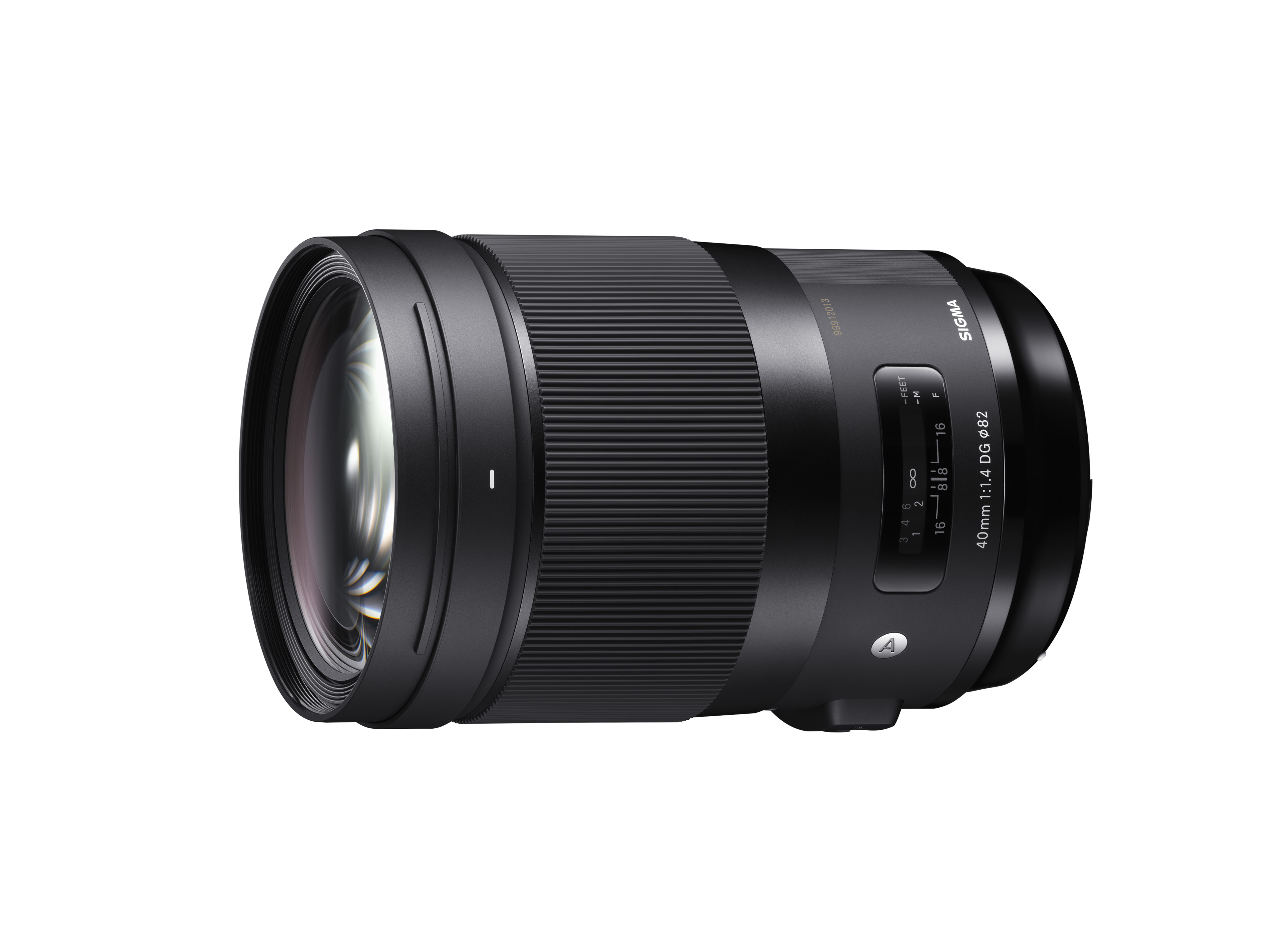
Sigma UK announces pricing and availability of 40mm F1.4 Art
Sigma UK has announced that the price of the highly anticipated Sigma 40mm F1.4 DG HSM Art is £1099.99 inc VAT. The retail price is significantly higher than both the 35mm and 50mm F1.4 models, but the new lens features a much more complex optical construction than either. As well as appealing to stills photographers for its indeterminate field of view, it is also expected to be a highly attractive option for filmmakers for the same reason.
A spokesman for the company said the new lens will be available this month (November) in Sigma, Canon and Nikon mounts. When launched at Photokina, the lens was slated for October. No reason for the slight delay has been given. The Sony mount version will be available in January 2019.
The lens can be pre-ordered at the following:
Update: I reviewed this lens for Digital Photographer magazine, and it is an outstanding lens. Unfortunately, this lens has now been discontinued. However, it can still be purchased secondhand.
Used sales [affiliate links]:
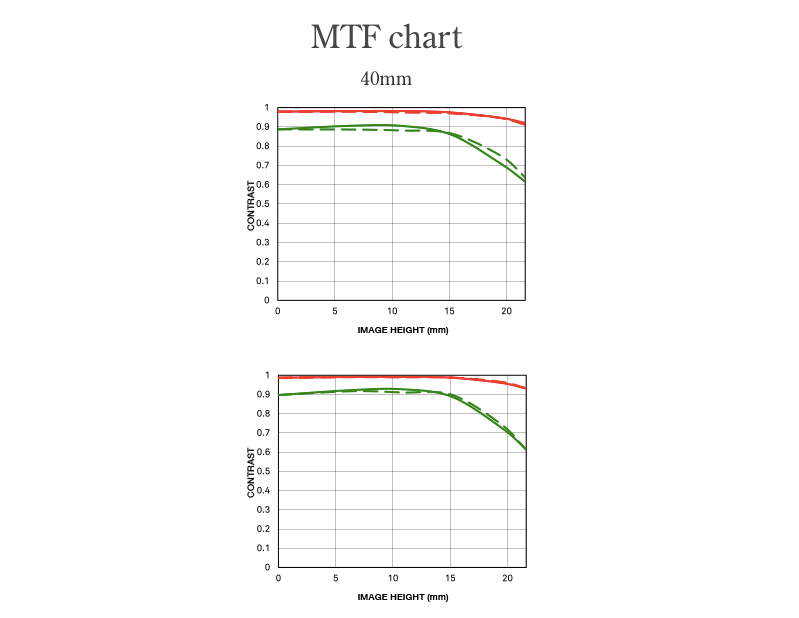
According to Sigma’s own MTF charts, the performance is exceptional. But I’m unsure as to whether these results are theoretical or from real samples. If you’re unfamiliar with MTF, the left-hand side represents the centre of the lens, with the right side stretching out to the corner. The four plotted lines together form a visual representation of overall sharpness.
The large-structure contrast shown by the red solid and dotted lines is excellent, and the higher-frequency contrast, or the ability to resolve small-scale detail, is outstanding and in some ways ahead of the already superb performance of the 35mm F1.4 and 50mm F1.4 lenses. Note Sigma measures at 10 and 30 lp/mm, and so can not be directly compared with MTF charts from other makers using different spatial frequencies. For example, Hasselblad and Zeiss measure higher frequency contrast than Sigma, at 40 lp/mm.
High contrast across all spatial frequencies is desired; however, a drop to the corners in higher frequencies is still usually acceptable so long as the lower-frequency contrast remains high. Sigma doesn’t say which aperture the two graphs are measured at, which is surprising, but usually one is at the initial aperture and the second is at the optimum, possibly F5.6.