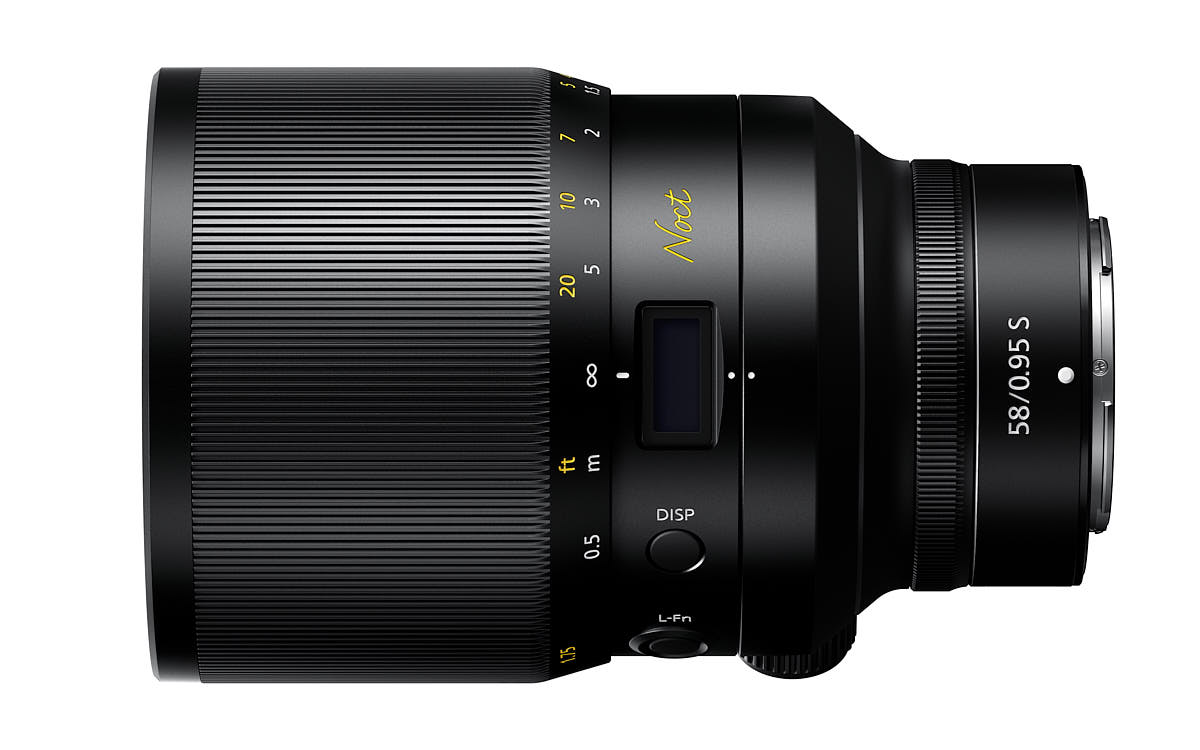
Comparing maximum aperture values in third- and half-stops can be challenging, so I’ve created a table to facilitate this comparison. Below F1.0, the differences become even more complex, so please consider this information as a guideline rather than definitive (and it may be subject to updates). However, you’re unlikely to encounter many lenses in regular production with such apertures. For instance, both the Nikon Noct Nikkor and the Leica Noctilux have a maximum aperture of F0.95, which is 1/3 stop “faster” than F1.0, nearly 1 stop faster than F1.2 and 1 1/3 stops faster than F1.4, making them a significant benefit for low-light photography.
Interestingly, if you’re a film buff, Kubrick’s Zeiss Planar 50mm F0.7 adapted NASA lenses used to film indoor scenes with just candlelight for illumination in Barry Lyndon are 1 1/2 stops faster than F1.2.
Aperture values in full, and typical half and third stops
| Full Stops | Third and (Half) Stops | Full and (Half) Stops |
| F0.5 | F0.5 | F0.5 |
| F0.6 | ||
| (F0.63) | (F0.63) | |
| F0.67 | ||
| F0.7 | F0.7 | F0.7 |
| 0.8 | ||
| (F0.9) | (F0.9) | |
| F0.95 | ||
| F1.0 | F1.0 | F1.0 |
| F1.1 | ||
| (F1.2) | (F1.2) | |
| F1.3 | ||
| F1.4 | F1.4 | F1.4 |
| F1.6 | ||
| (F1.7) | (F1.7) | |
| F1.8 | ||
| F2.0 | F2.0 | F2.0 |
| F2.3 | ||
| (F2.4) | (F2.4) | |
| F2.5 | ||
| F2.8 | F2.8 | F2.8 |
| F3.2 | ||
| (F3.5) | (F3.5) | |
| F3.6 | ||
| F4.0 | F4.0 | F4.0 |
| F4.5 | ||
| (F4.8) | (F4.8) | |
| F5 | ||
| F5.6 | F5.6 | F5.6 |
| F6.3 | ||
| (F6.7) | (F6.7) | |
| F7.1 | ||
| F8 | F8 | F8 |
Apertures like F4.8 and F6.7 are the mathematically correct standard half-stop values. However, some cameras display F4.5 and F6.3 because their electronic aperture increments don’t always correspond exactly to the theoretical values, especially when set to 1/3 stops. That said, for the sake of sounding obvious, those with the option to set 1/2 stops should display them.
Articles may include affiliate links. If you purchase through these links, we may earn an affiliate commission at no extra cost to you.