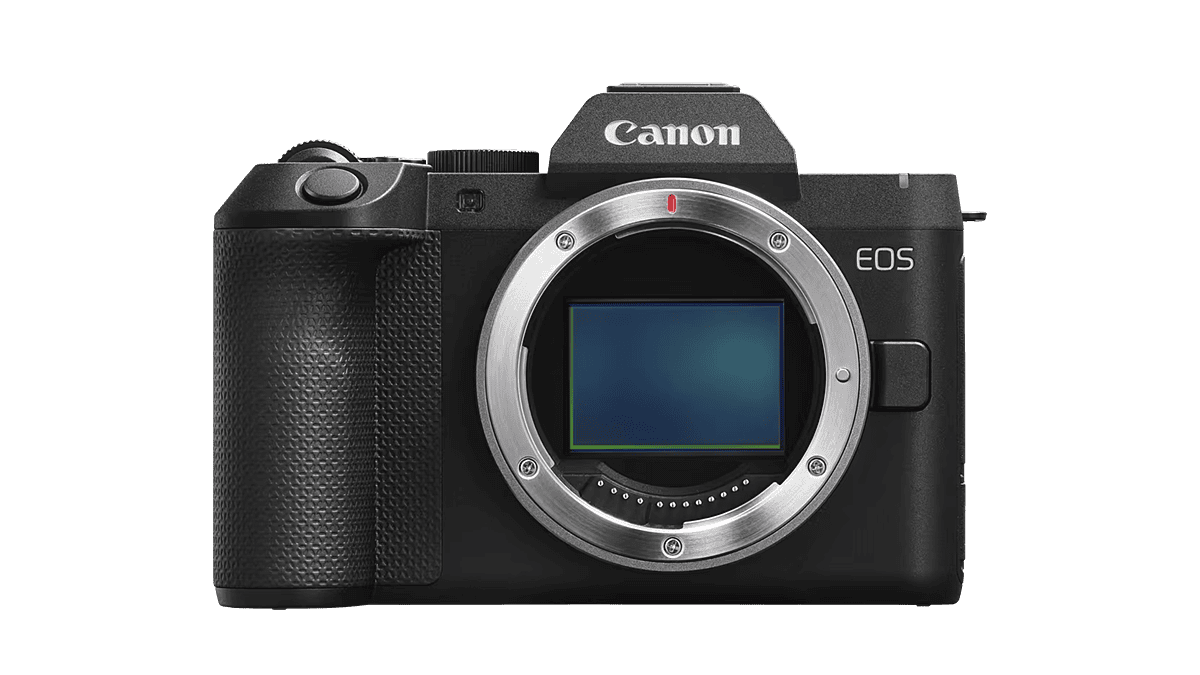
Canon has finally addressed the most conspicuous omission in its EOS R8. The new EOS R8 Mark II adds in-body image stabilisation, making the compact full-frame camera more complete, but not necessarily more interesting.
The original R8 was a curious proposition. It offered a full-frame sensor and strong autofocus in a relatively small body, but omitted IBIS. That helped keep the camera light and presumably reduced costs, but it also meant that photographers using unstabilised lenses in lower light levels had to rely on faster shutter speeds/higher ISOs or a tripod.
The Mark II corrects that. The addition of five-axis IBIS is the headline change, and for some photographers it will be a meaningful one. For others, particularly those already using stabilised RF lenses, it may be less consequential.
The rest of the camera appears to be an evolution rather than a reinvention. Canon retains the 24.2-megapixel full-frame sensor, while adding handling and autofocus refinements. The result is a more capable R8, but one that still sits below the R6 series in the range.
That leaves the pricing question. The original R8’s appeal was partly its relatively accessible route into Canon full-frame. At £1,729.00 body-only, the EOS R8 Mark II remains considerably cheaper than the EOS R6 Mark III, now reduced to £2,599. But the gap is no longer so large that the R6 III can be ignored. For buyers considering a new full-frame Canon, the additional £870 buys access to a more advanced body and a different level of capability. The R8 Mark II’s appeal will therefore depend on whether its smaller size and lower price outweigh those differences.
The EOS R8 Mark II is therefore best understood as Canon correcting a design compromise rather than introducing a fundamentally new camera. Whether that makes it a better buy will depend on how much value you place on stabilisation.
Pre-order from WEX UK